The global sportswear market is expanding, but buying football shirts internationally still requires careful supplier evaluation. Grand View Research estimated the global sports apparel market at approximately USD 248.9 billion in 2023. It also forecast a 6.6% compound annual growth rate from 2024 to 2030. These figures show strong commercial demand, yet they do not guarantee dependable jersey sourcing.
For global buyers, a Cristiano Ronaldo Jersey is more than a printed shirt. Fabric weight, badge stitching, name-set durability, size consistency, packaging, and delivery accuracy all influence buyer satisfaction. Suppliers should provide clear product specifications, recent quality samples, factory information, and transparent minimum-order quantities. Independent reports from McKinsey and the World Economic Forum also highlight rising expectations for traceability, responsible production, and resilient supply chains. Buyers should therefore examine production evidence instead of relying only on attractive catalog images.
Licensing and intellectual-property compliance deserve equal attention. Official club and tournament products may require authorization, while unofficial merchandise can create serious commercial and reputational risks. A trustworthy supplier explains its product status clearly and provides relevant documentation where applicable. Small details matter. A loose neck label can damage a large order’s resale value.
This guide compares leading Cristiano Ronaldo Jersey suppliers for international buyers. It considers product quality, customization capacity, communication, shipping performance, and buyer protection. No supplier scorecard is flawless. Market conditions change, and public information can be incomplete. Careful sampling, written specifications, and staged purchasing remain sensible safeguards.
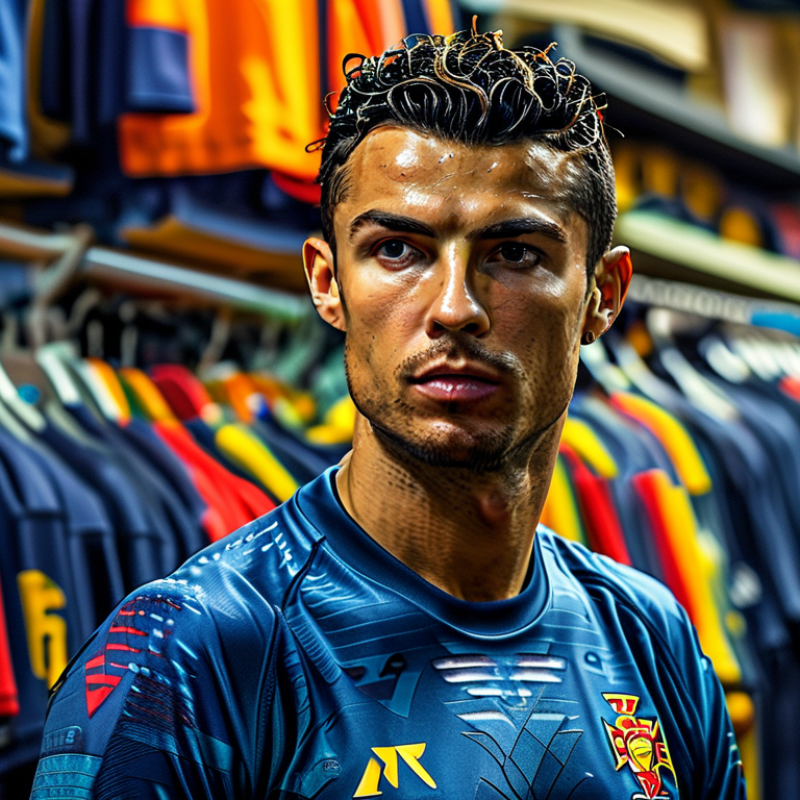
Top Cristiano Ronaldo Jersey Suppliers for Global Buyers
The global Cristiano Ronaldo jersey market is shaped by loyalty, timing, and regional demand. Buyers in Europe often seek current match designs, while collectors may prefer earlier career styles. Seasonal tournaments can quickly change search volumes and wholesale prices. Supplier experience matters because demand rarely stays stable for long.
Reliable suppliers should provide clear product specifications, fabric details, size charts, and high-resolution product photos. Buyers should request samples before placing large orders. Stitching, badge placement, numbering, and color accuracy deserve close inspection. Documentation also helps verify authorized distribution and consistent production standards. However, product listings are not always complete. That remains a weakness across this market.
Shipping conditions vary by destination. Customs paperwork, delivery insurance, and return procedures should be discussed before payment. A dependable supplier explains these points without vague promises. Regional sizing differences can create avoidable returns, especially when buyers rely on familiar charts. I have found that measuring a real garment is safer than guessing from labels. Small details matter.
Price alone is a poor supplier test. Very low quotations may reflect thinner fabric, unstable quality, or missing services. Professional buyers compare samples, communication speed, production capacity, and after-sales support. They also monitor demand responsibly, since popular player merchandise can become oversupplied after major events. The market moves quickly. Mistakes can be expensive.
| Supplier Category | Common Production Base | Typical Buyer Segment | Typical MOQ | Indicative Production Lead Time | Customization Capability | Best Use Case | Key Verification Requirement |
|---|---|---|---|---|---|---|---|
| Licensed sportswear distributors | Europe, North America, the Middle East, and selected Asian markets | Official retailers, department stores, professional e-commerce sellers | Usually 10–100 units per style, subject to allocation | In-stock: 3–14 days; replenishment: 4–12 weeks | Usually limited to approved collections and authorized packaging | Sales of officially licensed player jerseys | Current licensing authorization, invoices, product codes, and supply-chain traceability |
| Private-label football apparel manufacturers | China, Vietnam, Bangladesh, Pakistan, Turkey, and other textile-exporting markets | Wholesalers, private-label retailers, fan-wear distributors | Approximately 100–500 units per design | Sample approval: 7–21 days; bulk production: 30–60 days | Fabric, color, labels, packaging, size range, and non-infringing graphics | Original football-inspired products without protected player or club marks | Factory audit, fabric composition, size tolerance, inspection report, and trademark review |
| Custom teamwear suppliers | Europe, Türkiye, China, Pakistan, and South Asia | Amateur clubs, schools, academies, fan groups, event organizers | Usually 10–50 sets per design | Artwork approval: 3–10 days; production: 20–45 days | High; names, numbers, colors, sponsor areas, collars, and fabrics | Team orders and coordinated supporter apparel | Written confirmation that all supplied artwork and marks are buyer-owned or licensed |
| Wholesale ready-stock exporters | Major garment-export hubs in Asia, Türkiye, and Eastern Europe | Online sellers, market traders, regional wholesalers | Approximately 20–200 units, depending on stock availability | Usually 3–15 business days before export | Low; normally limited to packing, labeling, and assortment selection | Fast-moving seasonal inventory and test orders | Live inventory confirmation, product photos, packing list, and pre-shipment inspection |
| Print-on-demand apparel platforms | Distributed fulfillment centers across North America, Europe, and Asia-Pacific | Small online stores, creators, and low-volume retailers | Often 1 unit or no formal MOQ | Usually 2–10 business days before delivery, excluding peak periods | Graphic placement and garment selection; limited technical jersey construction | Demand testing and low-inventory e-commerce models | Design-rights compliance, print durability, return policy, and delivery coverage |
| Sports merchandising wholesalers | Western Europe, the United States, the Gulf region, and East Asia | Sports shops, travel retailers, stadium-area stores, online marketplaces | Approximately 25–250 units per SKU | In-stock: 3–14 days; seasonal imports: 6–16 weeks | Generally limited; assortment and packaging may be negotiable | Regional distribution of established football merchandise | Wholesale account eligibility, authorized distribution documents, and product authenticity checks |
| Made-to-order cut-and-sew factories | Pakistan, Bangladesh, China, Vietnam, Türkiye, and Portugal | Importers seeking fabric and construction control | Approximately 300–1,000 units per style | Sampling: 10–30 days; bulk production: 45–90 days | Very high; patterns, trims, performance fabrics, labels, and packaging | Long-term collections and larger private-label programs | Capacity, social-compliance records, technical pack approval, and independent quality inspection |
| Regional import agents and sourcing offices | Established in major sourcing and distribution centers worldwide | International buyers needing supplier coordination and local support | Varies by factory; commonly 100–500 units per style | Supplier search: 1–3 weeks; production follows factory schedule | Depends on the appointed manufacturer | Multi-country sourcing, factory communication, consolidation, and inspection | Agency agreement, commission disclosure, factory ownership details, and export documentation |
| Authorized resale and liquidation channels | North America, Europe, Australia, and other mature retail markets | Discount retailers, outlet operators, secondary-market sellers | Usually 5–100 units per SKU or mixed carton | Usually 3–21 business days, depending on warehouse location | None; products are generally pre-existing inventory | End-of-season, overstock, or discontinued official merchandise | Original purchase records, condition grading, SKU verification, and resale authorization |
: Request product specifications, fabric details, size charts, and clear photographs. Ask for lawful authorization documents. A polished listing can still mislead you.
Samples reveal stitching quality, badge placement, color accuracy, and fabric comfort. Compare the sample with the approved specifications. Bulk production may differ.
Licensed manufacturers usually provide stronger documentation and consistent sizing. Authorized wholesalers may offer faster delivery and mixed quantities. Custom factories support special production needs. Online traders offer convenience, but information may be incomplete.
Compare samples, fabric weight, stitching, packaging, delivery terms, and after-sales support. Very low prices may indicate thinner fabric or unstable quality. Cheap is not always efficient.
Regional sizing can differ significantly. Measure a real garment instead of trusting familiar labels. Check chest width, sleeve length, and body length manually. Small errors create expensive returns.
Discuss carton dimensions, delivery terms, customs documents, insurance, and return procedures. Confirm who handles import duties. Request traceable shipment updates. Delays still happen.
Verify supplier identity, production records, labeling information, and authorization documents. Ask for accurate commercial invoices. Check destination rules for textiles and intellectual property. Do not assume marketplace ratings prove compliance.
Start with a small trial order. Keep an approval sample. Review defect photographs and delivery accuracy. Use staged payments when appropriate. I would not depend on one successful shipment.
Review defect rates, response times, documentation, shipment accuracy, and return handling quarterly. Record every agreement in writing. Even reliable suppliers need audits and reminders. That part is easy to neglect.
The global Cristiano Ronaldo Jersey market serves retailers, sports distributors, online sellers, and promotional businesses seeking dependable products for international customers. This guide explains how to evaluate suppliers by examining product quality, fabric standards, sizing consistency, production capacity, communication, and business reliability. It also compares common supplier types, including manufacturers, wholesalers, and made-to-order producers, helping buyers choose partners that match their sales volume and target market.
Key considerations include authenticity claims, customization options, pricing structures, minimum order quantities, sample policies, and quality-control procedures. Buyers should also review shipping capabilities, packaging, customs documentation, product labeling, and compliance with applicable trade and consumer regulations. Building a long-term supplier relationship requires clear contracts, consistent inspections, transparent payment terms, accurate delivery schedules, and responsive after-sales support. With careful research and ongoing performance evaluation, international buyers can reduce supply risks and develop a stable, compliant jersey business.

 BESTPOOL