China Top Chelsea Shirt Manufacturer Wholesale Supplier

Time:2026-10-27 Author:Amelia
0%

The global demand for a Chelsea Shirt reflects football’s growing influence on fashion, identity, and retail. Grand View Research reports that the global sports apparel market continues to expand, supported by club merchandise, fan culture, and online purchasing. Deloitte’s Football Money League also shows that commercial revenue remains essential for leading clubs. These findings create opportunities for reliable wholesale suppliers.

A Chelsea Shirt is not merely fabric with a badge. It represents loyalty, memory, and match-day emotion. Buyers expect accurate colors, stable sizing, breathable polyester, and durable heat-transfer details. A professional factory should also provide fabric testing, colorfastness records, sample approval, and clear production timelines. Small details matter. Stitch tension matters too.

Simon Chadwick, a sports business professor and football industry analyst, has said, “Football is no longer only a sport; it is a global business.” His observation explains why manufacturers must combine textile experience with commercial discipline. However, market data does not guarantee product quality. That assumption deserves reflection.

A dependable China Chelsea Shirt manufacturer should verify licensing requirements before producing branded goods. It should also maintain transparent sourcing, responsible labor practices, and consistent quality control. Wholesale buyers need more than a low quotation. They need predictable lead times, accurate size grading, flexible minimum order quantities, and responsive communication.

Our outline examines manufacturing capability, fabric selection, customization, inspection procedures, packaging, and wholesale cooperation. It also considers sustainability, because cheaper production can create expensive problems later. A strong supplier earns trust through evidence, not promises.
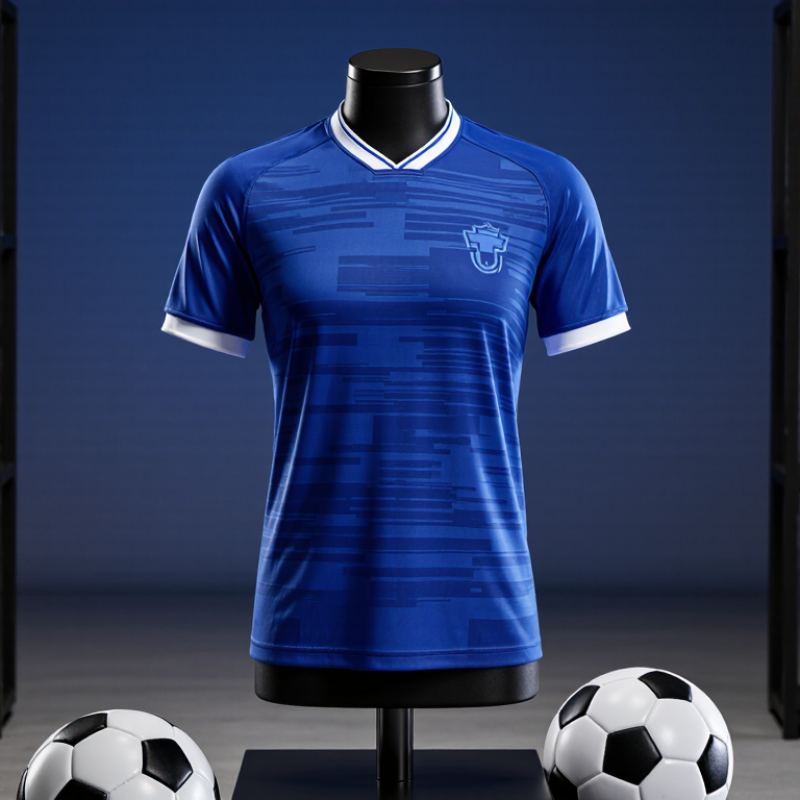
China Top Chelsea Shirt Manufacturer Wholesale Supplier

Chelsea Shirt Manufacturing in China: Industry Overview

China remains a major base for football shirt manufacturing, supported by mature fabric, knitting, dyeing, and printing networks. The WTO World Trade Statistical Review 2023 reported that China supplied 41.3% of global textile exports and 31.7% of clothing exports in 2022. These figures explain why wholesale buyers often source technical shirts from Chinese factories.

Production usually begins with polyester jersey fabric, moisture-control testing, and digital or heat-transfer decoration. Experienced suppliers can manage size grading, collar construction, sleeve finishing, and carton packing under one production plan. The Textile Exchange Materials Market Report 2024 also shows growing attention toward recycled polyester, although recycled content does not automatically guarantee better durability. That point deserves scrutiny.

Quality control is practical and measurable. Factories should check fabric weight, color fastness, seam strength, print alignment, and shrinkage before shipment. AQL-based inspections can reduce avoidable defects. Still, paperwork is not enough. I have seen production schedules look perfect while late approval of artwork caused delays. Clear tech packs, pre-production samples, and written tolerances remain essential. Smaller suppliers may offer flexibility, but their testing systems can be less consistent. Buyers should verify factory records, sample results, production capacity, and export experience before placing wholesale orders.

China Top Chelsea Shirt Manufacturer Wholesale Supplier

Chelsea Shirt Manufacturing in China: Industry Overview

China remains one of the world’s largest apparel manufacturing and exporting hubs. The chart shows China’s annual apparel export value for HS 61–62 knitted and non-knitted clothing categories, measured in US$ billions. The decline in 2023 reflects weaker global apparel demand after the post-pandemic recovery period.

Source: UN Comtrade international trade statistics; apparel categories HS 61–62.

Key Features of a Reliable Chelsea Shirt Wholesale Supplier

A reliable Chelsea shirt wholesale supplier should show production knowledge, not just attractive catalog photos. Ask for fabric details, such as polyester composition, weight, breathability, and colorfastness. A practical supplier can explain why one fabric suits humid training conditions better than another. Small details matter.

Request a physical sample before confirming a large order. Check collar strength, sleeve alignment, stitching density, print adhesion, and measurement accuracy. A useful supplier provides a size chart with clear tolerances, usually within a few centimeters. Ask for close-up photos after washing. Real testing is more valuable than polished promises. The sample may reveal weaknesses.

Consistency also defines professional service. The supplier should confirm minimum order quantities, production dates, packaging methods, and inspection procedures in writing. They should provide traceable business information and respond clearly when specifications change. Authorized designs and legally compliant materials must be handled carefully. I would not trust a supplier who avoids basic documentation. Even experienced buyers can overlook packing damage or late size changes, so an independent pre-shipment inspection remains sensible. Communication should feel steady, not rushed.

Materials, Production Standards, and Customization Options

A reliable football shirt supplier starts with fabric selection. Textile Exchange’s 2024 Materials Market Report recorded 124 million tonnes of global fiber production in 2023. Polyester represented about 57% of that volume. For wholesale shirts, recycled polyester can reduce virgin material demand, but its quality still varies. Buyers should request fiber-content tests, colorfastness results, and fabric weight records. A practical sample should feel smooth, dry quickly, and resist snagging around the collar.

Production standards need visible evidence. A professional factory should operate documented quality procedures aligned with ISO 9001 principles. Restricted-substance controls should also match applicable REACH requirements. Good inspections check fabric defects, stitching density, print adhesion, measurement tolerance, and wash shrinkage. The International Organization for Standardization recommends standardized textile care labeling through ISO 3758. However, paperwork alone is not enough. I have seen attractive samples fail after repeated washing because heat settings were poorly controlled.

Customization can include sublimated graphics, stitched numbers, woven badges, sleeve details, collar shapes, and graded sizing. Digital artwork should be supplied in vector format, with clear color references. For large orders, suppliers should confirm the minimum order quantity, sample approval process, production schedule, and packaging method. Textile Exchange also reported that recycled polyester formed a growing share of polyester supply, yet recycled inputs remain limited compared with total demand. That gap deserves honest discussion. A lower-impact claim without traceable material records is only a promise.

Wholesale Pricing, Minimum Orders, and Quality Control

China Top Football Shirt Manufacturer Wholesale Supplier

Wholesale pricing depends on fabric weight, printing method, size range, packaging, and order volume. A supplier should provide a clear quotation instead of one attractive figure. Request separate costs for samples, production, labels, cartons, and shipping. Larger orders often reduce the unit price, but cash flow matters. A low price is not always a useful price.

Minimum order quantities vary by design and color. For a new buyer, a smaller trial order can reduce inventory risk. Some factories may require several hundred pieces per color, while repeat designs may allow more flexibility. Confirm the MOQ in writing. Small orders may carry higher setup costs. That detail is easy to overlook.

Quality control should cover fabric, stitching, color accuracy, measurements, badges, and packaging. Experienced teams usually inspect materials before cutting, products during sewing, and finished garments before dispatch. Ask for a pre-production sample and a final inspection report with photographs. Check sleeve length and collar shape carefully; these details can change after bulk production. Independent inspection adds confidence, but it does not replace clear specifications. No factory plan is flawless. A missed measurement or delayed approval can still affect the shipment. Suppliers that explain problems early are often more reliable than those promising perfect results.

How to Choose and Work With a China-Based Supplier

Choosing and Working With a China-Based Football Shirt Supplier

A reliable China-based football shirt supplier should provide clear production evidence. Ask for fabric details, size charts, stitching photos, and recent sample measurements. A professional factory can explain GSM, breathability, colorfastness, and printing durability in practical terms. Avoid suppliers that only send polished catalog images.

Request a physical sample before discussing large wholesale quantities. Check the collar shape, seam strength, sleeve balance, and washing results.

I once focused too heavily on a low unit price. The sample looked acceptable, but the fabric felt thin after washing. That mistake showed me why testing matters more than attractive quotations.

Confirm the minimum order quantity, sample fee, production schedule, and packaging method in writing.

Communication needs structure. Send a detailed specification sheet with artwork files, measurements, fabric preferences, and acceptable tolerances. A dependable supplier should confirm each point instead of guessing. Use staged quality checks during cutting, sewing, printing, and final packing. Independent inspection can add cost, but it may prevent larger losses. Discuss payment terms carefully, and verify business documents before placing an order. Keep messages organized through one contact person. Delays still happen. A thoughtful supplier reports them early and offers a realistic adjustment, rather than making promises that production cannot keep.

FAQS

Why are football shirts often manufactured in China?

China has mature fabric, knitting, dyeing, printing, and garment production networks. This supports efficient wholesale manufacturing. Not always cheaper.

What materials are commonly used for football shirts?

Polyester jersey fabric is common because it is lightweight and supports moisture-control features. Recycled polyester is increasingly available. It does not automatically improve durability.

What should buyers check during quality control?

Check fabric weight, color fastness, seam strength, print alignment, measurements, and shrinkage. Inspect materials before cutting and finished garments before shipment. Small details matter.

How can buyers compare wholesale prices accurately?

Request separate costs for samples, production, labels, cartons, and shipping. Ask about fabric weight, printing methods, sizes, and order volume. A low price may hide setup fees.

What minimum order quantity should a new buyer expect?

Minimum quantities vary by design, color, and factory capacity. Some suppliers require several hundred pieces per color. A small trial order can reduce inventory risk.

Why is a physical sample important?

A sample reveals collar shape, sleeve balance, seam strength, fabric feel, and washing performance. Catalog images can look excellent. Test the real garment.

How should buyers choose a reliable supplier?

Request size charts, stitching photos, fabric details, sample measurements, and production evidence. Verify business documents, export experience, capacity, and testing records. Polished images are not proof.

How can communication reduce production delays?

Use one contact person and provide artwork, measurements, fabric preferences, and acceptable tolerances. Confirm approvals in writing. Delays still happen.

Should buyers use independent inspections?

Independent inspection can identify defects before dispatch and add useful confidence. It does not replace clear specifications or approved samples. No inspection plan is flawless.

What common sourcing mistake should buyers avoid?

Do not focus only on the lowest unit price. I once overlooked fabric performance after washing. The sample seemed acceptable, but it felt too thin later. That required reconsideration.

Conclusion

China has become a major production base for Chelsea Shirt products, offering flexible manufacturing capacity, competitive wholesale pricing, and a wide range of customization services. Reliable suppliers typically provide multiple fabric options, accurate sizing, durable printing or embroidery, reinforced stitching, and production processes that meet consistent quality standards. Buyers can often customize colors, patterns, labels, packaging, and other design details according to their market requirements.

When selecting a China-based Chelsea Shirt wholesale supplier, buyers should evaluate material quality, manufacturing experience, sample performance, communication efficiency, minimum order quantities, lead times, and quality-control procedures. Clear agreements on specifications, inspection standards, payment terms, and delivery schedules can help reduce risks during cooperation. Comparing several suppliers, requesting samples, and confirming production details before placing a large order are practical steps for building a stable supply relationship and achieving dependable product quality.


Amelia

Amelia

Amelia is a seasoned marketing professional with a wealth of expertise in our company’s core offerings. With an unwavering passion for driving growth and innovation, she plays a pivotal role in shaping our marketing strategies and enhancing brand visibility. A key aspect of her responsibilities......