How to Buy Licensed Inter Milan Football Jerseys Wholesale

Time:2026-10-09 Author:Charlotte
0%

Buying an Inter Milan Football Jersey wholesale requires more than comparing prices. It demands careful checks on licensing, product quality, and supplier reliability. This guide introduces a practical process for retailers, distributors, and teamwear businesses seeking authentic merchandise through legitimate channels.

A trustworthy supplier should provide clear company details and licensing documentation. Ask for invoices, product codes, manufacturing information, and permission to use club trademarks. Request physical samples before placing a large order. Check the stitching, woven badges, sponsor printing, fabric weight, care labels, and packaging. A genuine shirt should feel consistent, not merely look impressive in photographs.

Wholesale terms also deserve close attention. Confirm minimum order quantities, available sizes, delivery schedules, return conditions, and payment protections. Compare the sample with official product information where possible. Small differences can reveal serious problems. A polished catalogue can still mislead. That is worth remembering.

Experienced buyers often inspect several samples from the same production batch. This helps identify uneven printing, loose threads, or inconsistent sizing. Keep written records of every quotation and approval. They support accountability if an order fails to match expectations. Still, no checklist removes every risk. Supplier communication may be slow, and seasonal demand can change suddenly. Plan conservatively, especially before major fixtures or holiday sales.

This article focuses on lawful sourcing and responsible commercial decisions. It does not encourage counterfeit products, unauthorized branding, or misleading advertising. By combining documented licensing, hands-on inspection, and realistic cost planning, buyers can build a more dependable wholesale program. The goal is simple: secure quality Inter Milan merchandise that customers can trust.
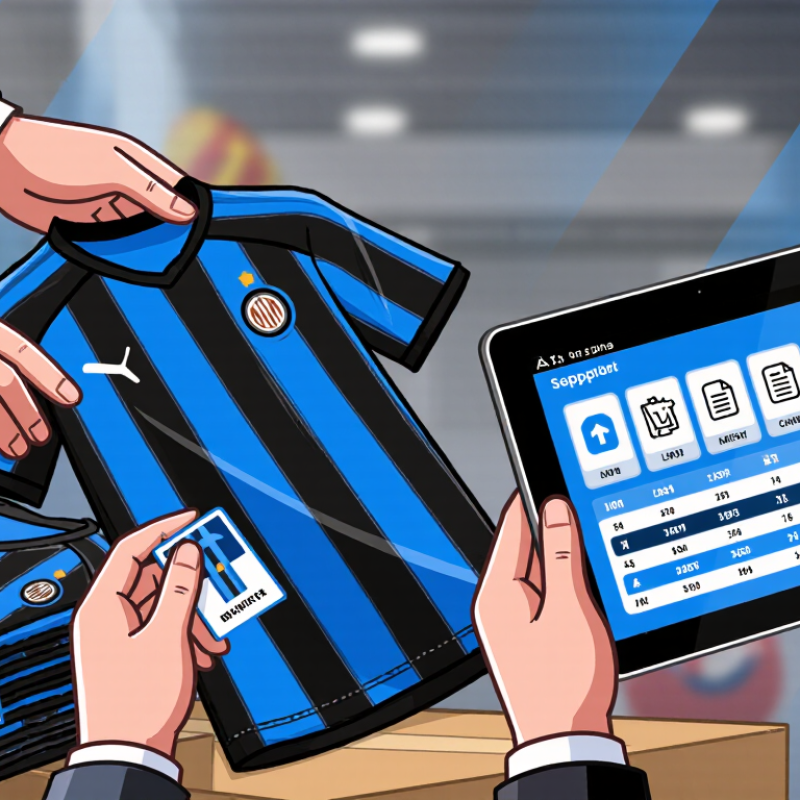
How to Buy Licensed Inter Milan Football Jerseys Wholesale

Understanding Licensed Inter Milan Jersey Wholesale Requirements

Buying licensed Inter Milan football jerseys wholesale requires more than finding a low supplier price. The buyer must verify licensing rights, product authenticity, and sales territory. Ask the supplier for written authorization from the rights holder. Check whether the permission covers wholesale distribution in your country. A valid business registration and complete company address are also essential. Avoid suppliers who provide unclear certificates or copied documents. Small details matter.

Request a sample before placing a large order. Inspect the fabric, stitching, labels, badges, size chart, and packaging. Compare the product code with the supplier’s invoice and authorization papers. Confirm minimum order quantities, production time, payment terms, and return procedures. Licensed stock may have different rules for match versions, fan versions, and youth sizes. Get every condition in writing.

Compliance records should be stored carefully. Customs authorities may request invoices, authorization letters, or product descriptions. Do not use unofficial images or misleading claims in advertisements. A spreadsheet helps track sizes, colors, quantities, and shipment dates, but it can still contain errors. Recheck the figures before payment. I would also question unusually cheap offers, even when the samples look acceptable. The process is not flawless. A supplier’s professional replies are useful, but documented evidence remains more reliable. Regular checks protect buyers from costly misunderstandings and support a transparent wholesale relationship.

Identifying Authorized Suppliers and Verifying License Credentials

How to Buy Licensed Inter Milan Football Jerseys Wholesale

Buying licensed football jerseys wholesale requires more than comparing prices. I check the supplier’s legal company details, trading address, and business history before discussing quantities. A professional supplier should provide clear licensing evidence, not vague promises. Ask for an authorization letter, certificate number, covered territory, product category, and validity dates. Short answers are warning signs.

Verify every document carefully. The license holder’s name should match the supplier’s contract and invoice. Product descriptions should identify approved designs, sizes, materials, and labeling requirements. I also request a physical sample before placing a large order. Examine the neck label, wash instructions, stitching, packaging, and serial or batch information. Small details matter. When possible, confirm the certificate through the rights holder’s official licensing channel or a recognized industry database.

Payment records deserve attention too. Use a business account matching the registered company name, and keep quotations, invoices, and approval emails together. A supplier may show genuine paperwork but still offer unauthorized stock from another market. That risk is easy to underestimate. I once focused too heavily on a competitive quote and overlooked inconsistent packaging; the delay cost more than expected. My process is not perfect, so I now record each verification step and ask an independent compliance adviser to review unclear documents before committing to wholesale production.

Before purchasing licensed football jerseys wholesale, verify the supplier’s legal identity, written authorization, trademark records, product labeling, and invoice traceability. The chart shows the number of key evidence points to check in each area; it does not represent any company or brand performance.

Comparing Jersey Types, Quality Standards, and Wholesale Prices

When buying licensed football jerseys wholesale, compare the garment type before comparing price. Authentic player versions usually use lighter fabric, heat-applied badges, and tighter athletic cuts. Replica fan versions often use heavier polyester and stitched details. Training shirts may offer simpler graphics and lower costs. Deloitte’s 2024 Annual Review of Football Finance reported that European football generated €35.3 billion in 2022/23, showing why licensed merchandise remains commercially significant.

Wholesale quotations commonly place fan jerseys around $18–30 per unit, training shirts near $16–28, and authentic versions around $35–60 for 50–100 pieces. These figures are indicative, not fixed. Freight, duties, packaging, and payment fees can change the landed cost sharply. Ask for a written quotation. Request samples before committing. A low price may hide poor fabric recovery or incorrect sizing.

Quality checks should include fabric weight, seam strength, colorfastness, badge adhesion, and wash durability. ISO 105 colorfastness methods and ISO 13688 protective-clothing principles provide useful testing references, although they are not complete jersey standards. SGS textile testing guidance also emphasizes fiber composition, dimensional stability, and harmful-substance screening. Verify authorization documents, product codes, invoices, and territory rights. I once underestimated packaging volume; the final freight bill weakened the original saving. That mistake still matters.

Checking Minimum Orders, Customization Options, and Delivery Terms

Wholesale buyers should treat minimum order quantity (MOQ) as a cash-flow decision, not a discount headline. A 2024 Grand View Research report valued the global sports apparel market at $248.31 billion in 2023. It projects 6.9% annual growth through 2030. That growth does not make every size mix safe. Ask for MOQ by design, size, and color. A supplier quoting 100 units may require 100 per size. Confirm whether samples count toward production. Request authorization records, product codes, and an invoice trail. This supports licensed sourcing and resale credibility. Keep the first order narrow. Follow sales history, not optimism.

Customization needs precise terms. Confirm sleeve patches, player names, numbers, thread colors, artwork approval, and correction costs. Ask for a pre-production sample, photographed beside a ruler. Do not accept “standard quality” as a specification. State tolerance limits, packaging, carton labels, and inspection rights. The National Retail Federation’s 2024 Retail Returns Report estimated that 16.9% of U.S. retail sales were returned in 2024. Incorrect names or poor sizing can increase that burden quickly. Delivery terms should cover production days, dispatch dates, transport mode, insurance, customs responsibility, and late-delivery remedies. Split shipments may protect launch timing, but they can raise freight costs. It is easy to favor the cheapest quote too quickly. Leave buffer time before tournament seasons.

How to Buy Licensed Inter Milan Football Jerseys Wholesale - Checking Minimum Orders, Customization Options, and Delivery Terms

Buying Dimension Typical Wholesale Requirement What to Check Before Ordering Recommended Action
Licensing Verification Authentic licensed products should be supported by current authorization or supply-chain documentation. Check whether the seller can provide licensing evidence, product authorization, invoices, and traceable product information. Request documents before paying a deposit, especially when the price is significantly below the normal market level.
Minimum Order Quantity Usually 20–100 pieces per style or color; larger orders may be required for special production. Confirm whether the minimum applies to the whole order, each size, each design, or each customization method. Ask for a written MOQ schedule covering standard stock, mixed sizes, mixed designs, and made-to-order items.
Size Assortment Common adult sizes range from XS to 3XL, while youth sizes are often sold separately. Review the actual measurement chart because sizing may vary by production region and garment cut. Order a sample or size set before committing to a large quantity.
Available Product Types Wholesale catalogs commonly separate stadium, replica, player, training, goalkeeper, and youth versions. Check fabric weight, badge application, sponsor treatment, collar construction, and product labeling. Compare like-for-like products instead of comparing prices across different garment grades.
Name and Number Customization Customization may be available through heat-applied lettering, numbering, embroidery, or officially approved patches. Confirm permitted player names, number formats, patch availability, placement, color, and spelling approval procedures. Approve a digital or physical sample before bulk decoration begins.
Customization Fees Personalization is generally charged separately from the garment price and may include setup or artwork fees. Ask whether fees are calculated per item, per design, per size, or per production batch. Request an itemized quotation showing blank-garment, customization, packaging, and shipping costs.
Sample Policy Samples are commonly available before bulk production, although sample charges and shipping may apply. Check whether the sample fee is refundable or deducted from the final wholesale invoice. Inspect color, stitching, print alignment, labels, fabric, and packaging before approving production.
Production Lead Time Stock items: approximately 3–10 business days; customized or made-to-order items may require 2–6 weeks. Confirm whether lead time starts after payment, artwork approval, size confirmation, or licensing verification. Include the production start date and latest completion date in the purchase agreement.
Stock Availability Ready stock can reduce production time but may have limited sizes, colors, and customization choices. Ask for a current inventory report rather than relying only on catalog photographs. Reserve stock in writing and obtain confirmation that inventory will not be substituted without approval.
Quality Control Commercial checks normally cover measurements, color consistency, stitching, decoration placement, and packaging. Establish acceptable tolerance for measurements, printing defects, loose threads, stains, and damaged packaging. Use pre-shipment inspection photographs or an independent inspection for larger orders.
Packaging Garments may be individually folded and packed in protective bags, cartons, or retail-ready packaging. Confirm carton quantity, carton dimensions, gross weight, labeling, barcodes, and packing-list details. Specify packaging requirements in the quotation to prevent unexpected repacking costs.
Delivery Methods Common options include express courier, air freight, rail freight, and sea freight. Compare transit time, tracking availability, customs handling, insurance, and destination delivery terms. Choose the delivery method according to order value, deadline, and acceptable customs responsibility.
Estimated Transit Time Express delivery often takes 3–7 business days; air freight may take 5–15 days; sea freight commonly takes 25–45 days. Transit estimates may exclude production, customs clearance, weekends, holidays, and last-mile delivery. Request separate estimates for production time, dispatch time, transport time, and customs clearance.
Incoterms and Delivery Responsibility Quotations may use terms such as EXW, FOB, CIF, DAP, or DDP, each allocating different costs and risks. Clarify who pays export charges, freight, insurance, import duties, taxes, customs brokerage, and final delivery. Record the selected Incoterm and named destination in the purchase contract.
Import Documents Typical documents include a commercial invoice, packing list, transport document, and any required origin or compliance papers. Check destination-country rules for textile labeling, fiber composition, care instructions, duties, and trademark controls. Ask for draft shipping documents before dispatch so errors can be corrected in advance.
Payment Terms A common arrangement is a deposit before production with the balance due before shipment or after inspection. Review payment security, refund conditions, currency, bank charges, and the trigger for the final payment. Link the final payment to approved samples, inspection results, or documented shipment evidence.
Returns and Defective Goods Wholesale returns usually require notification within a defined period and photographic or inspection evidence. Confirm the treatment of manufacturing defects, incorrect sizes, decoration errors, shortages, and transit damage. Agree on replacement, credit, refund, and claim deadlines before placing the order.
Total Landed Cost The final cost may include product price, customization, packaging, freight, insurance, duties, taxes, and brokerage. Ensure the comparison uses the same product grade, quantity, delivery term, and destination. Calculate the landed cost per jersey before comparing suppliers or setting a resale price.

Completing the Purchase and Managing Wholesale Jersey Distribution

Completing a wholesale jersey purchase requires more than confirming the quantity. Request current licensing documents, product codes, size ratios, fabric details, and approved packaging. Verify the supplier’s business registration and delivery history. Licensing International reported $356.5 billion in global licensed merchandise sales in 2023, showing the scale of this market. It also shows why documentation matters. Large markets attract careful suppliers and careless intermediaries. Keep every specification in the purchase order, including inspection rights, delivery dates, currency, and replacement terms. A small mistake can affect hundreds of shirts.

Distribution should begin with a practical inventory plan. Separate adult, youth, goalkeeper, and training categories before the cartons arrive. Use barcode scans at receiving, then record size, color, batch, and destination. Deloitte’s 2024 Annual Review of Football Finance valued the European football market at €35.3 billion for the 2022/23 season. Demand is strong, but demand is uneven. Match periods may move popular sizes quickly, while unusual sizes remain longer. I once underestimated youth sizes and tied up cash for months. That was avoidable. Review weekly sell-through, return rates, damaged packaging, and regional demand. Keep a small reserve for replacements, but do not overstock emotionally. Tiered shipping can reduce delays, although cheaper freight sometimes creates frustrating tracking gaps. A signed delivery record and photo evidence protect both parties.

FAQS

What documents should a wholesale supplier provide?

Request an authorization letter, certificate number, covered territory, product category, and validity dates. Vague answers are warning signs.

How can I verify licensing documents?

Match the license holder’s name with the supplier’s contract and invoice. Confirm the certificate through an official licensing channel or recognized industry database.

Should I inspect a physical sample before ordering?

Yes. Check the neck label, wash instructions, stitching, packaging, and batch information. Small details matter.

What should I confirm about the minimum order quantity?

Ask whether the quantity applies to each design, size, or color. Confirm whether samples count toward production.

How should customization requirements be written?

Specify patches, names, numbers, thread colors, artwork approval, and correction costs. Request a photographed pre-production sample.

Which delivery terms need attention?

Confirm production days, dispatch dates, transport mode, insurance, customs responsibility, and late-delivery remedies. Keep buffer time.

How can I reduce inventory mistakes?

Separate adult, youth, goalkeeper, and training categories. Record each carton’s size, color, batch, and destination.

What payment and recordkeeping practices are safer?

Use a business account matching the registered company name. Keep quotations, invoices, approval emails, and inspection records together.

How should I manage stock after delivery?

Scan barcodes at receiving and review weekly sell-through, returns, damaged packaging, and regional demand. Do not overstock emotionally.

What mistakes should wholesale buyers reflect on?

I once trusted a competitive quote too quickly and missed inconsistent packaging. My process was imperfect, so I now document every verification step.

Conclusion

Buying licensed Inter Milan Football Jersey products wholesale requires careful planning and responsible supplier verification. Start by defining your business needs, including the intended market, preferred jersey versions, size range, expected quantity, and budget. Work only with suppliers that can provide clear proof of authorization, product documentation, and transparent business information. Confirm that the jerseys are officially licensed and meet applicable quality, labeling, and consumer protection requirements before placing an order.

Next, compare product materials, stitching, printing, sizing accuracy, packaging, and available styles. Review wholesale prices alongside minimum order quantities, customization policies, sample options, payment procedures, production schedules, shipping arrangements, and return terms. Request samples when possible to evaluate quality before committing to a larger purchase. After confirming all details in writing, complete the transaction through secure, traceable channels and maintain organized records. Finally, plan inventory storage, order tracking, customer distribution, and quality checks so the wholesale operation remains efficient, compliant, and reliable.


Charlotte

Charlotte

Charlotte is a seasoned marketing professional with a deep understanding of the company's portfolio and a passion for elevating its presence in the market. With a keen eye for detail and a commitment to excellence, she ensures that our professional blog is regularly updated with insightful articles......