Choosing a Liverpool Football Kit supplier takes more than comparing prices. Buyers need clear product details, dependable communication, and realistic delivery estimates. Small details matter. Check fabric weight, stitching around the crest, print quality, and whether the listed sizes match a measurement chart. A product photograph can look sharp, yet tell you little about how the shirt feels after a full match or several washes.
This guide introduces suppliers serving buyers in different regions and explains what to compare before placing an order. Some may focus on licensed retail products; others may offer teamwear, custom printing, or bulk orders. These categories are not interchangeable. Ask for current product specifications, sample availability, minimum order quantities, shipping timelines, and written information about returns. For branded goods, confirm the supplier’s authorization or the product’s licensing status rather than relying on a logo alone.
Reliable evaluation takes evidence. Review recent customer feedback, compare quoted terms, and keep important supplier communication in writing. If a sample is available, inspect its seams, fabric, badge placement, and wash-care label before committing to a larger purchase. No supplier directory can stay complete or guarantee every transaction. Some details may change between publication and inquiry. Use the listings as a starting point, verify claims directly, and choose a supplier whose quality and service fit your needs.
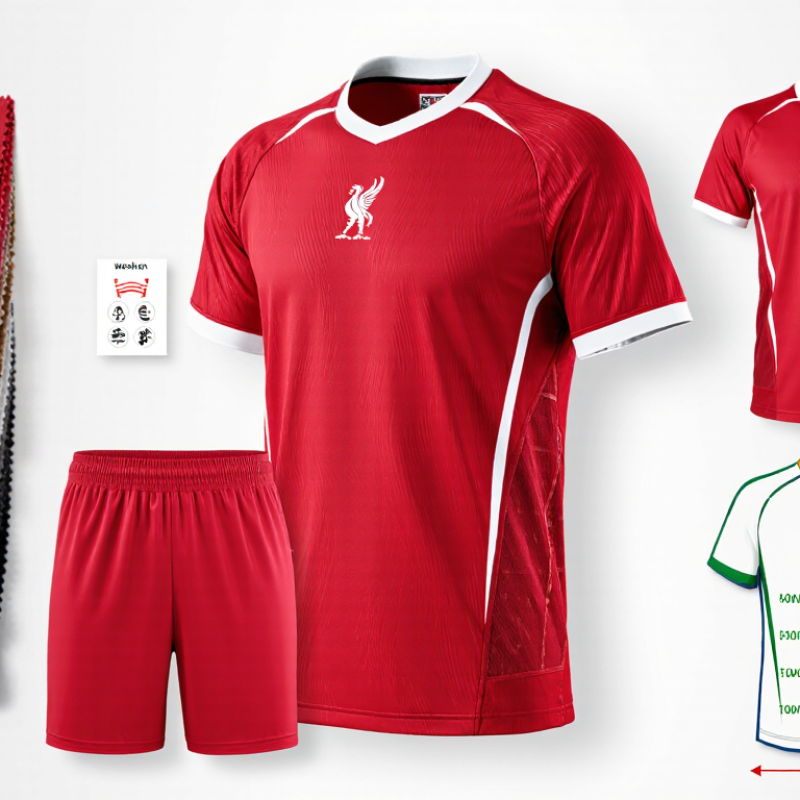
Liverpool football kit suppliers do more than sew shirts. Their roles often span fabric sourcing, pattern development, sizing, printing, quality checks, and delivery to clubs or retailers. Some specialize in technical garments; others coordinate several production stages. In practice, a delayed fabric shipment can matter as much as a stitching defect. Details matter. Suppliers serving the Liverpool market should be assessed on fit consistency, colour matching, lead times, and their ability to explain material origins. These checks are useful, though they do not guarantee every batch will match the sample.
The market is shaped by performance expectations and cost pressure. McKinsey and the World Federation of the Sporting Goods Industry reported that the broader sporting goods sector grew about 6% annually from 2021 to 2023. That figure is not specific to football kits, but it signals a competitive supplier environment. Textile Exchange’s Materials Market Report 2024 says global fibre production reached 124 million tonnes in 2023, with polyester accounting for about 57%. For kit buyers, this makes fabric choice and traceability practical purchasing questions, not just marketing claims. Yet supplier data can be incomplete, and price comparisons often miss waste, rework, or inconsistent sizing. A careful review should include samples, production capacity, testing records, and realistic delivery schedules.
| Supplier Category | Common Manufacturing Regions | Role in the Kit Supply Chain | Typical Products or Services | Market Overview | Key Sourcing Considerations |
|---|---|---|---|---|---|
| Performance-fabric producers | East and Southeast Asia; selected European textile clusters | Supply the knitted or woven material used to make shirts, shorts and training garments. | Polyester fabrics, lightweight knits, mesh panels and fabrics with moisture-management finishes. | Demand is shaped by lightweight construction, durability requirements and the use of recycled textile inputs. | Check material specifications, colour consistency, testing documentation and the origin of recycled content. |
| Yarn and fibre suppliers | Asia, Europe and other established synthetic-fibre production markets | Provide the raw or intermediate fibres that textile mills turn into fabric. | Polyester yarns, recycled polyester inputs and other textile fibres. | Availability and pricing can be affected by feedstock costs, production capacity and demand across the wider apparel sector. | Request traceability records and verify fibre composition against the finished-product specification. |
| Cut-and-sew manufacturers | Bangladesh, China, Indonesia, Türkiye and Vietnam are among established apparel-manufacturing locations. | Cut fabric, assemble garment panels and complete sewing and finishing operations. | Match shirts, shorts, training wear and other performance apparel made to buyer specifications. | Factories may serve domestic and export markets; capabilities, capacity and product specialisation vary by facility. | Assess production capacity, workmanship, labour standards, audit scope and ability to meet delivery schedules. |
| Sportswear product-development and OEM/ODM partners | Asia and Europe, with production networks that may span several countries | Coordinate product development and, depending on the contract, manage manufacturing through partner facilities. | Sampling, pattern development, technical specifications, production coordination and quality control. | Service scope differs: an OEM typically manufactures to a buyer’s design, while an ODM may also contribute product design. | Confirm design ownership, subcontracting arrangements, quality checkpoints and responsibility for compliance. |
| Printing and garment-decoration providers | Located near garment factories or in regional finishing and decoration hubs worldwide | Apply approved graphics, numbers, lettering and other decorative elements to garments. | Heat-applied transfers, screen printing, sublimation printing and embroidery where appropriate. | Method selection depends on fabric, artwork, order size, wear requirements and production sequence. | Check colour matching, wash durability, placement accuracy and compatibility with the garment material. |
| Trims and component suppliers | Global sourcing markets, often located near textile and apparel production clusters | Provide the smaller components needed to finish and identify garments. | Labels, sewing thread, zippers, drawcords, elastic, packaging and care-label materials. | These components are usually sourced as part of a coordinated bill of materials and can affect product compliance and presentation. | Verify specifications, restricted-substance requirements, labelling rules and continuity of supply. |
| Testing and compliance services | Testing facilities operate across major manufacturing and consumer markets | Evaluate materials and finished products against agreed quality, safety and regulatory requirements. | Physical-performance tests, colourfastness checks, chemical testing and inspection services. | Testing needs depend on the destination market, product composition, buyer standards and applicable regulations. | Use suitable test methods and confirm that reports cover the relevant material, colour and production batch. |
| Freight and logistics providers | International shipping networks connecting manufacturing regions with destination markets | Move fabric, components and finished apparel between suppliers, factories, distribution centres and retailers. | Ocean freight, air freight, customs brokerage, warehousing and shipment tracking. | Transport mode affects cost, transit time and emissions; shipping schedules and customs processes can influence availability. | Plan around production readiness, customs documentation, inventory needs and disruption contingencies. |
| Licensed-product and distribution partners | Market-specific networks serving retail, e-commerce and wholesale channels | When appointed by the relevant rights holder, support authorised product development, sales and distribution. | Retail-ready apparel, product packaging, wholesale distribution and e-commerce fulfilment. | Licensing and distribution rights are contract-specific; a supplier’s manufacturing role does not by itself establish permission to sell branded goods. | Verify authorisation, territory, product scope, intellectual-property permissions and channel restrictions. |
Note: This is a category-based overview of the global football-kit supply chain. It does not identify or imply that any listed supplier category or manufacturing region is a confirmed supplier to Liverpool Football Club.
Review fabric details, stitching, size charts, and delivery timelines. Ask for a physical sample. Photos can hide rough seams.
Try the garments during movement and after washing. Check fit across several players, since one size chart may not suit everyone.
Compare unit prices, shipping, duties, and lead times. A low price may mean thinner fabric, but not always.
Request inspection records and clear details about defect handling. Keep an approved sample for later comparison. Gaps remain.
Late sample approval, seasonal shipping peaks, or incorrect carton labels can disrupt schedules. Ask for realistic milestones and stock updates.
Request written authorization covering product types, sales areas, channels, and contract dates. Confirm current requirements with a qualified adviser.
Ask for traceable fiber records and dated evidence on water, energy, and waste. Recycled-content claims should state percentages and verification methods.
No. Check measurements, color, seams, and wash results across production batches. Small differences can still appear under stadium lights.
This overview explores how Liverpool Football Kit suppliers support teams, retailers, and supporters through product design, sourcing, production, and distribution. It explains how supplier partnerships may be assessed, including their ability to meet performance needs, maintain consistent quality, manage reliable delivery, and respond to changing demand. Rather than focusing on individual brands, it considers the kinds of suppliers serving Liverpool football in 2026 and the capabilities that distinguish established providers.
The article also follows the kit supply chain from manufacturing locations to global distribution networks, highlighting coordination, inventory planning, and product availability. It outlines the importance of appropriate licensing, clear quality controls, and responsible production practices. Together, these topics offer a practical picture of the commercial and operational factors behind Liverpool Football Kit supply, while showing how suppliers can balance team requirements, supporter expectations, and sustainability goals.

 BESTPOOL